





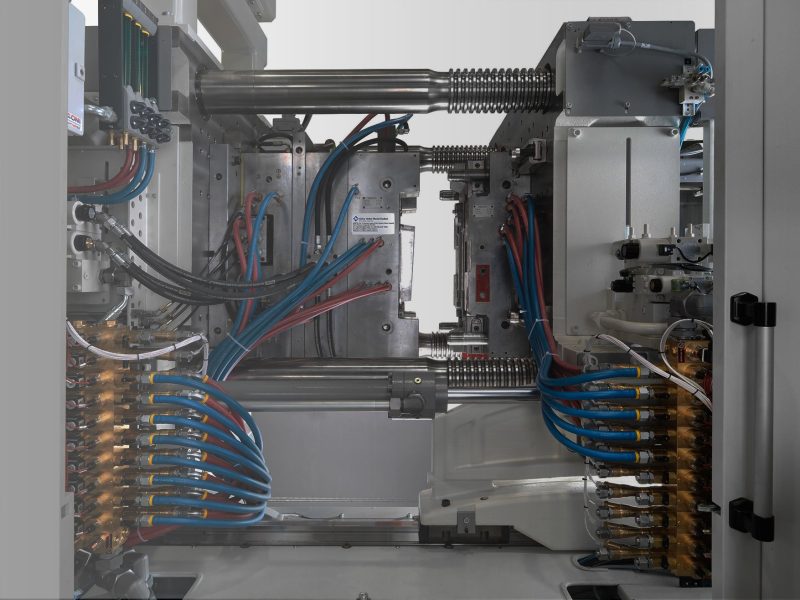
Hot runners save material and cycle time and suit high volumes, multi-cavity moulds and cosmetic parts. Cold runners cost less to build and are often the better choice for low volumes or frequent colour changes. We recommend one or the other in the DFM report for every mould.
What is the runner?
The runner is the channel system that carries molten plastic from the press nozzle to the cavities. In a cold runner mould the plastic in the runner cools and is ejected with the parts, then removed and reground or discarded. In a hot runner mould, heated manifolds and nozzles keep the plastic molten, so only the parts are ejected.
Side-by-side comparison
| Hot runner | Cold runner | |
|---|---|---|
| Mould cost | Higher | Lower |
| Material use | No runner waste | Runner is scrap or regrind |
| Cycle time | Shorter | Longer – the runner must cool too |
| Gate appearance | Small gate marks; valve gates for cosmetic parts | Gate vestige to be trimmed |
| Colour and material changes | Slower – manifold must be purged | Quick |
| Maintenance | Heaters and thermocouples to look after | Simple |
| Best for | High volumes, multi-cavity, cosmetic parts | Low volumes, prototypes, frequent colour changes |
When a hot runner pays back
The extra mould cost is repaid through saved resin and shorter cycles. The higher the annual volume, the more expensive the resin and the more cavities the mould has, the sooner that happens. High-cavitation medical moulds and thin-wall household parts are typical examples.
When a cold runner is the better choice
For a few thousand parts a year, for frequent colour changes or for heat-sensitive materials, a cold runner keeps the mould simple and economical. Runner design and gate position are checked by mould flow analysis in either case – see mould design and DFM.
Hot runner brands
We can fit the hot-runner brand you specify, which helps if your own moulding shop already stocks spare parts for a particular system. The brand is written into the quotation together with the steel and mould base.
Frequently asked questions
Does a hot runner always reduce part cost?
Not always. At low volumes the saved material and cycle time may not repay the higher mould cost. We compare both options in the DFM report.
Can one mould combine hot and cold runners?
Yes. A hot runner can feed a short cold sub-runner to several cavities, which reduces cost while keeping most of the material saving.
Which runner is better for cosmetic parts?
Hot runners with valve gates usually leave the smallest gate marks, which suits visible surfaces on electronic housings and automotive parts.
Have a part to discuss? Send your drawing or 3D file through our inquiry form – our engineers reply with a quotation and DFM suggestions.