




Answers to common questions about metal injection molding (MIM). For more detail, read our MIM guide.
What is metal injection molding (MIM)?
A process that injects a mixture of fine metal powder and binder into a mould, removes the binder and sinters the part to high density. It combines the shape freedom of injection moulding with metal properties.
What kinds of parts suit MIM?
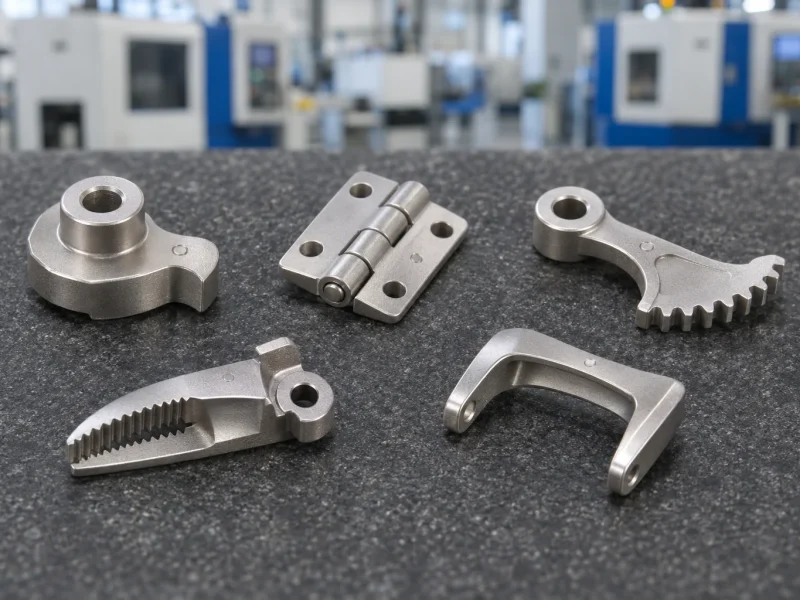
Small, complex metal parts needed in volume, such as lock components, hinges, small levers, medical instrument parts and watch or electronics hardware.
Which materials are used in MIM?
Common choices are stainless steels such as 316L and 17-4PH and low-alloy steels. Tell us the required strength, hardness and corrosion resistance so the material can be reviewed.
How much do MIM parts shrink?
Typical linear shrinkage from the moulded part to the sintered part is around 15–20%. Mould dimensions and sintering supports are designed to account for it and to control distortion.
What tolerances can MIM achieve?
As-sintered tolerances are typically around ±0.3–0.5% of the dimension, depending on part size and shape. Closer fits usually need sizing or machining afterwards.
Is MIM suitable for low volumes?
Usually not, because the mould and process development must be paid for across the run. CNC machining or investment casting may be better for small quantities.
Can MIM parts be machined and finished?
Yes. They can be machined, heat treated and surface finished, including processes such as polishing and plating, depending on the alloy and the part.
What do you need for a quotation?
A 3D file and drawing, the material or required properties, annual quantity, and any heat treatment, finish or inspection requirements.
Talk to our engineers
Have a part to discuss? Send your drawing or 3D file through our inquiry form – our engineers reply with a quotation and DFM suggestions.
Images are illustrative.