





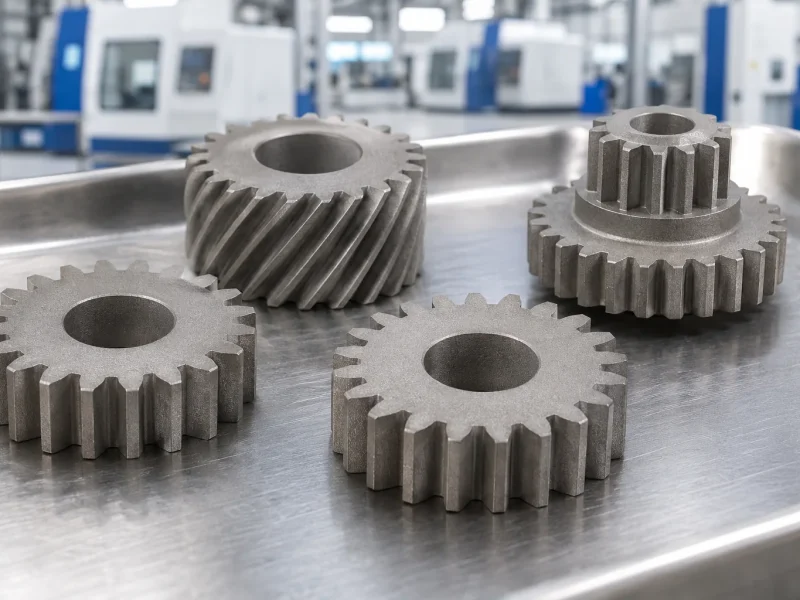
Answers to common questions about powder metallurgy (PM) and sintering. For more detail, read our powder metallurgy guide.
What is powder metallurgy?
A family of processes that make parts from metal powder. The most common route, and the one covered here, is conventional press-and-sinter PM: powder is pressed in a die and then sintered, bonding the particles without melting the part as a whole.
What does sintering do?
It bonds the pressed powder particles into a solid metal part and develops its strength. The temperature and furnace atmosphere are controlled to suit the material. Some material systems, such as those containing copper, develop a liquid phase during sintering.
What parts suit powder metallurgy?
Gears, bushes, cams, sprockets, flanged sleeves and small structural parts, especially shapes that press along one axis and are ordered in volume.
What materials are common?
Iron-carbon and iron-copper-carbon steels, stainless steels such as 316L, and bronze. Tell us the required strength and service conditions so the material can be reviewed.
Why are sintered parts porous, and is that a problem?
Pressing and sintering normally leave small pores. They reduce strength compared with solid metal, but they can be useful, for example to hold oil in self-lubricating bushes. Where needed, pores can be sealed.
What are oil-impregnated bushes?
Sintered bronze or iron bushes with oil held in their pores. The oil lubricates the shaft in service, which can reduce or remove the need for additional lubrication in suitable applications.
Can sintered parts be machined and heat treated?
Yes. Features that cannot be pressed, such as cross holes or threads, can be machined, and many iron-based parts can be heat treated.
What do you need for a quotation?
A 3D file and drawing, material or strength requirement, annual quantity, and any heat treatment, finish or test requirements.
Talk to our engineers
Have a part to discuss? Send your drawing or 3D file through our inquiry form – our engineers reply with a quotation and DFM suggestions.
Images are illustrative.